

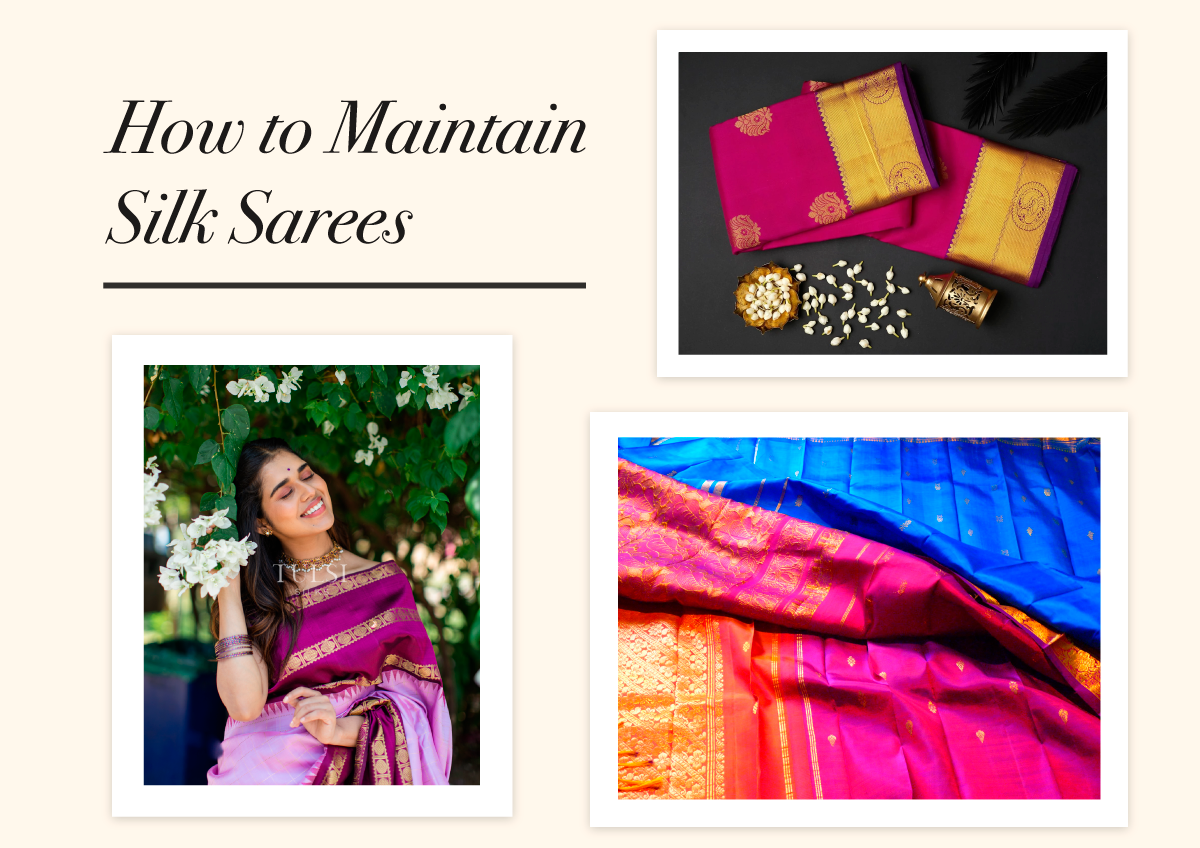

What’s in this blog
Silk sarees should be washed rarely and gently, ideally in cold or lukewarm water with a mild pH-neutral detergent, and never scrubbed, twisted or wrung. Dry them in the shade, never direct sunlight, and iron on a low silk setting from the reverse side. Store them wrapped in muslin or breathable cotton, never plastic, in a cool, dry, well-ventilated cupboard, and refold periodically to avoid permanent crease damage. Treat stains immediately by blotting, not rubbing, and avoid household remedies like petrol, bleach or toothpaste. Heavily embellished, bridal, zari-rich or heirloom sarees are best left to professional dry cleaning.
Table Of Contents
A silk saree holds up for decades when it's handled correctly, and breaks down fast when it isn't. The two outcomes usually come down to a handful of habits: how you wash it, how you store it, and how you treat it the first time something stains it. This guide covers all of that, with separate notes for where the advice changes depending on the type of silk saree you own.
| Care Step | Recommendation | Avoid |
|---|---|---|
| Washing | Cold or lukewarm water, mild pH-neutral detergent | Hot water, bleach, harsh detergent, soaking, wringing |
| Drying | Natural shade drying | Direct sunlight |
| Ironing | Low silk setting, reverse side, pressing cloth or steam | Direct heat on zari, ironing back and forth |
| Storage | Muslin or breathable cotton wrap, cool ventilated cupboard, periodic refolding | Plastic covers, same fold for years |
| Pest protection | Naphthalene or dried neem leaves, kept away from direct contact | Naphthalene touching the fabric or zari |
| Stains | Blot gently with a clean white cloth, treat promptly | Rubbing, scrubbing, petrol, bleach, toothpaste |
| Heavily embellished/bridal/heirloom sarees | Professional dry cleaning by a specialist in silk and zari | Home washing |
Not all silk sarees ask for the same care
"Silk saree care" often gets written as one universal checklist, but a Kanjivaram silk saree and an Organza saree are not the same fabric wearing different patterns. The weave, the weight, and the zari content all change how the saree should be washed, folded and stored.
Kanjivaram silk sarees
Kanjivaram silk sarees are woven with the body and border on separate looms and joined using the traditional korvai technique, which you can read more about in our guide to identifying pure Kanjivaram silk. Because of this construction, it's good practice to avoid repeatedly folding the saree along the same crease. Refolding it periodically generally helps distribute pressure more evenly over time.
Banarasi silk sarees
Banarasi silk sarees are renowned for their intricate zari weaving, worked into the fabric itself rather than embroidered on, so careful storage and gentle handling help preserve both the silk and the metallic threads. Depending on whether it's a Katan, Organza or Georgette base (our guide to Banarasi saree types breaks these down), the fabric can range from densely woven to sheer. Because Organza has a lightweight, sheer construction, it generally benefits from gentler handling than heavier weaves.
Tussar silk sarees
Tussar silk sarees are woven from shorter, coarser fibres than mulberry silk, which is what gives Tussar its distinctive texture. Its naturally textured weave generally benefits from gentle handling and careful storage. We've written more on this in how to identify and maintain Tussar silk sarees. Tussar can show creasing more visibly than some other weaves and often benefits from more frequent airing.
Mysore Silk sarees
Mysore Silk sarees typically have a smoother, more matte finish and a lighter weight than the heavier heritage weaves, which generally means they dry faster and need less rigorous handling. Like other zari-worked silk sarees, proper storage helps preserve the appearance of the zari on the border.
Gadwal sarees
Gadwal sarees combine a cotton body with a silk border and pallu, so the two halves of the same saree can respond differently to moisture and washing. Treat the silk portions with the same caution as any pure silk zari border, and avoid soaking the saree as a whole.
If you're not certain which category your saree falls into, our full Silk Sarees collection and our guide on Banarasi versus Kanjivaram sarees are useful starting points before you decide how to wash or store a piece.
Washing a silk saree at home
Most silk sarees don't need frequent washing, and over-washing is one of the fastest ways to dull a saree's lustre. When a wash is genuinely needed:
- Use cold or lukewarm water, never hot.
- Use a mild, pH-neutral detergent made for delicate fabrics. Skip regular detergent and definitely skip bleach.
- Don't soak the saree for long stretches. A brief soak is enough; extended soaking weakens the fibres.
- Don't scrub, twist or wring the fabric. Handle wet silk gently and avoid unnecessary stretching, as the fibres are more vulnerable while damp.
- Wash zari-heavy or heavily embellished sarees separately from other fabrics.
Delicate or valuable silk sarees are often better sent for professional dry cleaning, particularly for the first clean, rather than washed at home.
Drying
Let the saree dry naturally in the shade, never in direct sunlight, which fades colour and weakens the fibre over time. Don't wring it; instead let excess water drain off on its own, then pat it dry gently with a soft towel before it goes anywhere near a fold or a hanger. Make sure the saree is completely dry before storing it. Folding away even slightly damp silk is one of the more common causes of musty smell and mildew spots that show up months later.
Ironing
Iron on the low silk setting only, and iron from the reverse side wherever possible so the heat doesn't sit directly against the visible zari or embroidery. A pressing cloth between the iron and the fabric, or a steam setting, reduces the risk of scorch marks or a flattened sheen. Move the iron in one direction rather than back and forth, and avoid pressing directly over zari borders for extended periods, since prolonged heat is one of the more common ways zari tarnishes prematurely.
Storage
- Wrap the saree in muslin or soft, breathable cotton cloth rather than plastic. Plastic traps moisture, and trapped moisture is what eventually leads to mildew and fibre weakening.
- Store in a cool, dry, well-ventilated cupboard, away from direct sunlight.
- Refold the saree periodically along different crease lines. A saree left in the same fold for years wears thin exactly along that line, and it's often the first place a heritage saree shows damage.
- Keep silk sarees separate from other fabrics, and if a saree has embroidery or heavy zari work, fold it with the embellished side facing inward to reduce friction against the fold above it.
- Inspect stored sarees periodically for early signs of mildew, dampness, or insect activity, particularly before a change of season.
A note for humid climates: In humid climates, inspect stored sarees more frequently and ensure they are stored in a well-ventilated cupboard rather than a sealed one.
Pest protection, without damaging the zari
Keep silk away from damp storage areas, since that's where both mildew and moths tend to start. Naphthalene balls or dried neem leaves both work as repellents, but neither should touch the silk directly. Naphthalene in particular can discolour zari on contact, so wrap it separately or place it at a distance inside the cupboard rather than tucked into the folds of the saree itself.
Removing stains from a silk saree
Fresh stains are far easier to deal with than ones left to set, so the first move matters more than the products used later.
- Blot the stain gently with a clean white cloth. Don't rub, and don't scrub, since either will push the stain deeper into the weave and damage the surrounding threads.
- Avoid household remedies that circulate online, including petrol, bleach, and toothpaste. These can bleach the colour, damage the zari, or leave a residue that's harder to remove than the original stain.
- For a mild stain from sweat or oil, a small amount of pH-neutral liquid soap on a damp cloth, dabbed rather than rubbed, is usually enough.
- If the saree has heavy zari, embroidery, or is a bridal or heirloom piece, don't attempt the stain removal yourself. Send it for professional cleaning instead. The cost of a professional clean is almost always lower than the cost of a home remedy gone wrong.
Caring for heirloom and older silk sarees
A saree that's 20 or 30 years old, particularly one passed down from a mother or grandmother, needs a different level of caution than a saree bought last season. Silk fibres become more fragile with age, and that fragility is worse if the saree has spent years folded the same way or stored somewhere humid.
Before wearing or storing an heirloom saree:
- Unfold it gently rather than pulling the folds apart.
- Check for weakened creases, small tears, loose zari, or early signs of insect damage before you wear it.
- Air it out in a shaded, well-ventilated space before folding it again.
- Avoid washing an heirloom silk saree at home. If it needs cleaning, look for a dry cleaner with specific experience handling old silk and zari, not a general dry cleaning service.
- Refold it along a different crease than the one it's held for years, to take the stress off that original fold line.
- Store it wrapped in breathable cotton or muslin, not plastic.
If the zari has dulled or a border has started fraying, it's generally worth having the saree assessed by someone experienced in silk restoration before deciding whether to repair or retire it.
Home care versus professional dry cleaning
Not every saree needs a professional clean after every wear, and not every saree should be washed at home either. As a general rule:
- Lightly worn, simple silk sarees with minimal embellishment can usually be aired out and stored again without washing.
- Sarees worn to long events, especially with visible staining, should be professionally cleaned rather than treated at home.
- Bridal sarees, heavily zari-worked sarees, and heirloom pieces should go to a professional dry cleaner experienced with silk and zari specifically, not a general laundry service.
- Routine airing after each wear reduces how often a saree needs a full wash or clean in the first place, which is often the single most useful habit for extending a saree's life.
Final Thoughts
A well-made silk saree can last for decades when it's cared for properly. Washing it only when necessary, storing it in breathable fabric, protecting the zari, and treating stains promptly all help preserve its beauty for years to come. While general silk-care principles apply to most silk sarees, different weaves such as Kanjivaram, Banarasi, Tussar and Gadwal each benefit from slightly different handling. When in doubt, follow the care instructions provided with your saree or consult a trusted silk specialist.
Explore Our Silk Sarees
View all silk sareesFrom Kanjivaram to Banarasi, Organza to Tussar, discover handcrafted silk sarees sourced directly from master weavers across India





Editorial Note: General silk-care recommendations in this guide are based on published guidance from the Silk Mark Organisation of India and the Central Silk Board, Ministry of Textiles, Government of India. Fabric-specific recommendations are intended as practical care guidance and may vary depending on the weave, embellishments, and any care instructions provided at the time of purchase. For additional guidance on silk authentication and care, readers may also refer to the official resources published by these organisations.

